


Key Highlights
- Kama Jewelry has achieved a 27.1% compound annual growth rate over 30 years — entirely self-funded, with no outside capital ever raised.
- The company employs 1,200+ master craftspeople directly on payroll — preserving fine jewelry stone-setting skills that are rapidly disappearing globally.
- With the India-US trade deal cutting jewelry tariffs from 50%+ to 16%, Kama’s 60+ existing US clients and three decades of export experience place it at the front of a projected $3 billion opportunity.
- Kama operates with four independent audit bodies and SAP ERP since 2013 — governance infrastructure more typical of a listed company than a private manufacturer.
- FY27 target: 6.75 lakh pieces and 23% growth, backed by new CNC manufacturing capabilities, including 9-axis machining and binder jetting.
There is a kind of business that the trade knows intimately but the public has never heard of. Kama Jewelry Private Limited is one of them.
Founded on 27 May 1996 by Colin Shah — a first-generation entrepreneur from a family of doctors — Kama was built on a single principle: do the right thing, every time, even when no one is watching. Thirty years later, that principle has produced one of India’s most consequential fine jewelry manufacturing businesses.
Operating out of SEEPZ Special Economic Zone in Mumbai, Kama runs four specialist manufacturing plants covering 18KT gold, natural diamonds, platinum, and CNC machine-made jewelry. It manufactures an average of 47,508 pieces per month and serves over 260 clients across India, the United States, the UAE, and Europe.
A 30-Year Record Built Without Shortcuts
Kama’s 30-year CAGR of 27.1% — generated entirely without external capital — places it in a rare category among Indian manufacturers of any kind. Its post-pandemic CAGR of 16.8% confirms the recovery was not a bounce but an acceleration. The company has held a BBB Stable credit rating through demonetisation, the GST transition, a global pandemic, and gold prices touching Rs. 1,51,366 per 10 grams.
The India-US Trade Opportunity
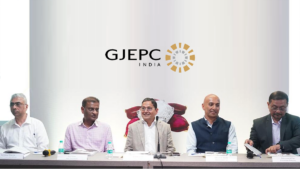
Kama’s anniversary arrives at a structurally significant moment. The India-US bilateral trade framework finalised in early 2026 reduced jewelry tariffs from over 50% to 16%. GJEPC estimates this creates a near-term export opportunity of $3 billion. India’s effective tariff rate on jewelry exports to the US now sits below China’s for the first time, making Indian manufacturers the preferred alternative for US buyers diversifying away from Chinese sourcing.
Kama, with 60+ existing US clients and three decades of verified export experience, is positioned to capture this opportunity without changing its product mix or infrastructure.
Governance and People
Kama is one of the few private manufacturers in India operating with the governance infrastructure of a listed company — four independent audit bodies, SAP ERP since 2013, and senior leadership averaging over 20 years of tenure. The company is not promoter-dependent: functional heads across sales, manufacturing, design, finance, and HR operate with independent accountability.
Its 1,200 craftspeople are employed directly on payroll — a deliberate, costly choice that preserves fine jewelry stone-setting skills disappearing elsewhere in the industry. Alongside this craft commitment, Kama is investing in the future: a new CNC facility is live, with production trials underway in 9-axis machining, binder jetting, and hot isostatic pressing.
Founder’s Words
“Kama is not 30 years old. Kama is 30 years young. We began with belief. We grew with discipline. We lead with trust. The best chapters are not behind us — they are waiting to be written.”
— Colin Shah, Founder & CEO, Kama Jewelry Private Limited
For an industry that has long known what Kama is capable of, the next decade may be when the rest of the world finds out.
Related Coverage

IIGJ Mumbai Celebrates 79 Graduates, Showcasing Innovation and the Future of Jewellery Design

UNNATI: Building the Women Who Will Shape India’s Jewellery Future

GJS 2026 Diwali Edition to Bring 400+ Exhibitors to Mumbai from October 2–4
GJEPC Holds 60th AGM, Reviews FY2025-26 Performance and Industry Priorities

De Beers’ 2025 Sustainability Report Signals Where the Natural Diamond Industry Is Heading