


Key Highlights
- Namibia is exploring direct rough diamond trade with India following India’s proposed new tax framework.
- A 15-year income-tax exemption has been proposed for rough diamond sales through notified Special Notified Zones (SNZs).
- GJEPC has invited Namibia to bring its rough diamonds to India and use the SNZ framework for trading.
- The proposed framework could give Indian MSMEs more direct access to high-quality Namibian rough diamonds without travelling overseas.
- GJEPC and Namibia are exploring the possibility of an MoU to deepen bilateral diamond trade cooperation.
Namibia is exploring a greater role for India in its rough diamond trade following India’s proposed 15-year income-tax exemption for rough diamond sales through notified Special Notified Zones (SNZs).
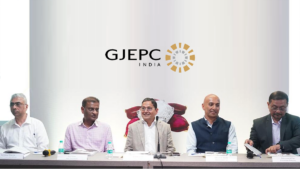
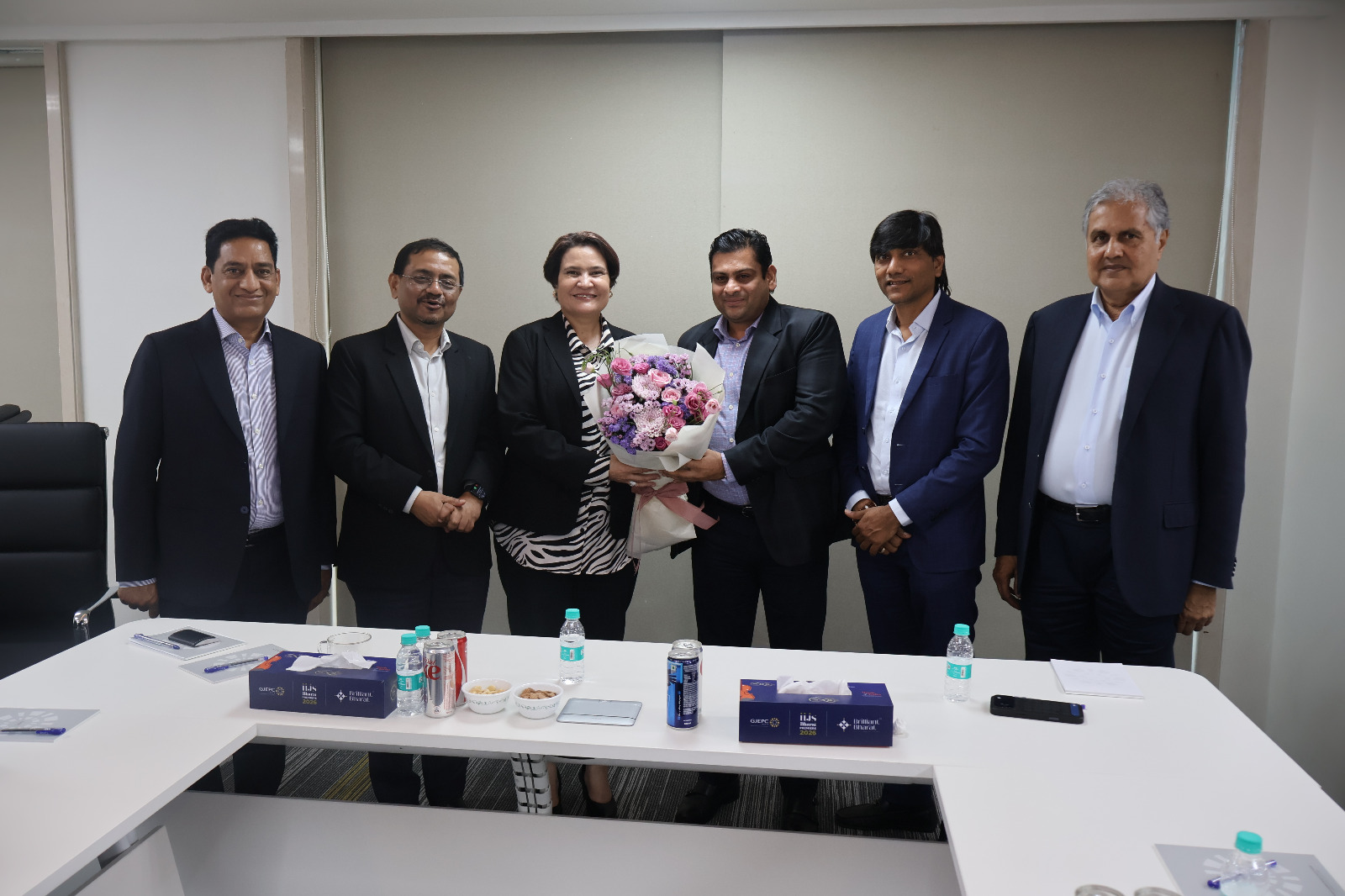
A senior Namibian delegation led by Ms Gaudentia Krohne, Deputy Minister, Ministry of Industries, Mines and Energy, visited the Gem & Jewellery Export Promotion Council (GJEPC) on 11 August as part of a B2B engagement focused on expanding cooperation between Namibia and India’s diamond industry.
The delegation included Rehabeam Nepaya, Deputy Director, Diamond Affairs; Secret Ruhaka and Titus Amukwelele, Diamond Inspectors; and Balchand Jain, Honorary Consul of Namibia in Mumbai.
During the visit, the delegation toured the GJEPC office, Bharat Diamond Bourse (BDB) and Indian Diamond Trading Centre (IDTC) before visiting customs facilities and other infrastructure. The programme provided the Namibian officials with an overview of India’s diamond trading and manufacturing ecosystem.
India Sees Opportunity to Become a Global Rough Diamond Trading Hub
Shri Kirit Bhansali, Chairman, GJEPC, said:
“Namibia produces the world’s highest-value rough diamonds, while India cuts and polishes 14 out of every 15 diamonds globally. With the proposed 15-year tax exemption for Special Notified Zones, India can now offer producer nations not just manufacturing, but a global trading hub. We look forward to building a lasting partnership with Namibia.”
The proposed tax measure forms a key part of India’s effort to attract international rough diamond trading activity into its Special Notified Zones at the Bharat Diamond Bourse in Mumbai and Surat Diamond Bourse.
The Taxation and Other Laws (Amendment) Bill, 2026 proposed a 15-year income-tax exemption on income from the sale of rough diamonds through notified SNZs. According to the GJEPC release, the exemption was proposed to apply from 1 October 2026 through the tax year ending 31 March 2041.
The proposed framework covers foreign mining companies, sightholders, brokers, aggregators, and tender and auction entities involved in rough diamond sales.
GJEPC Invites Namibia to Bring Rough Diamonds to India
The proposed framework could also improve access to international rough diamonds for Indian manufacturers, particularly smaller businesses.
Anoop Mehta, Convener – Diamond Panel, GJEPC, said:
“We have invited Namibia to bring its rough diamonds to India and utilise the new tax framework for trading through the Special Notified Zones. This will give Indian MSMEs more direct access to high-quality rough diamonds without the need to travel overseas. We are exploring this opportunity closely and, if the discussions progress, we would be happy to work towards an MoU with Namibia. We are very positive that, with this new policy, a greater share of Namibia’s diamond trade can come directly to India.”
The Indian Diamond Trading Centre (IDTC) is particularly relevant to this objective. The platform was developed to give smaller Indian manufacturers access to international rough diamonds without the cost of travelling to overseas markets.
Why Namibia Matters to India’s Diamond Trade
Namibia is a significant diamond-producing country, particularly known for the value of its rough diamonds.
According to Kimberley Process data cited by GJEPC, Namibia produced 2.09 million carats of diamonds valued at US$721.4 million in 2025. Its average production value of US$343.88 per carat was the highest among producing countries that year.
Namibia ranked as the fifth-largest diamond producer by value in 2025, accounting for approximately 8% of global rough diamond production by both volume and value. The country also exported 2.04 million carats valued at US$578.4 million during the year.
For India, which remains the world’s largest rough diamond importing market, stronger direct sourcing relationships with producing countries could have strategic significance.
India imported 106.09 million carats of rough diamonds valued at US$11.07 billion in 2025, according to the figures cited in the GJEPC release.
Namibia Highlights the Quality of Its Diamonds
For Namibia, the attraction is not simply access to India’s large manufacturing base. The country’s delegation also sees an opportunity to use India’s established trading infrastructure to bring Namibian rough diamonds closer to Indian buyers.
Ms. Gaudentia Krohne, Deputy Minister, Ministry of Industries, Mines and Energy, said:
“Namibia is having the best quality of diamonds in the world. We do not have the quantity, but we have the best quality. That’s why I am really proud to come from Namibia and talk about the Namibian diamonds in India.”
She added:
“We can bring our diamonds here, showcase them here and even sell them. If this platform created by India is already being used by other countries, why can Namibia not make use of it too?”
A Potential New Route for India-Namibia Diamond Trade
The delegation’s visit comes as India seeks to attract a wider pool of international mining companies and rough diamond trading entities into its notified zones.
For producer countries such as Namibia, the combination of India’s large diamond manufacturing base, established trading infrastructure and proposed long-term tax framework could create a stronger route for direct rough diamond trade with Indian businesses.
The visit also gave Namibian officials a view of India’s end-to-end diamond ecosystem. The BDB programme included an overview of India’s diamond industry, interaction with the BDB Managing Committee and a visit to IDTC. The planned engagement at SEEPZ was intended to provide further understanding of India’s diamond manufacturing infrastructure and operations.
If discussions progress towards an MoU between Namibia and GJEPC, the development could open a new channel for Namibian rough diamonds to reach Indian manufacturers and traders directly.
Related Coverage

WFDB President Mehul Shah Calls for Local-Language Declarations on ‘Laboratory-Grown Diamond’ and ‘Synthetic Diamond’

Belgian PM Bart De Wever Makes Historic First Visit to Bharat Diamond Bourse

Namibia Explores Direct Rough Diamond Link With India’s Diamond Industry

WFDB President Mehul Shah Honoured as ‘Industry Legend’ by GJEPC at IIJS Bharat Premiere 2026

India-UAE Diamond Trade Relations Strengthen as Consul General Visits Bharat Diamond Bourse