


From resource extraction to global brand-building, Botswana’s 60th independence anniversary has produced a landmark industry initiative — one that places natural diamond provenance, downstream value addition and enterprise development at the heart of the nation’s next chapter.
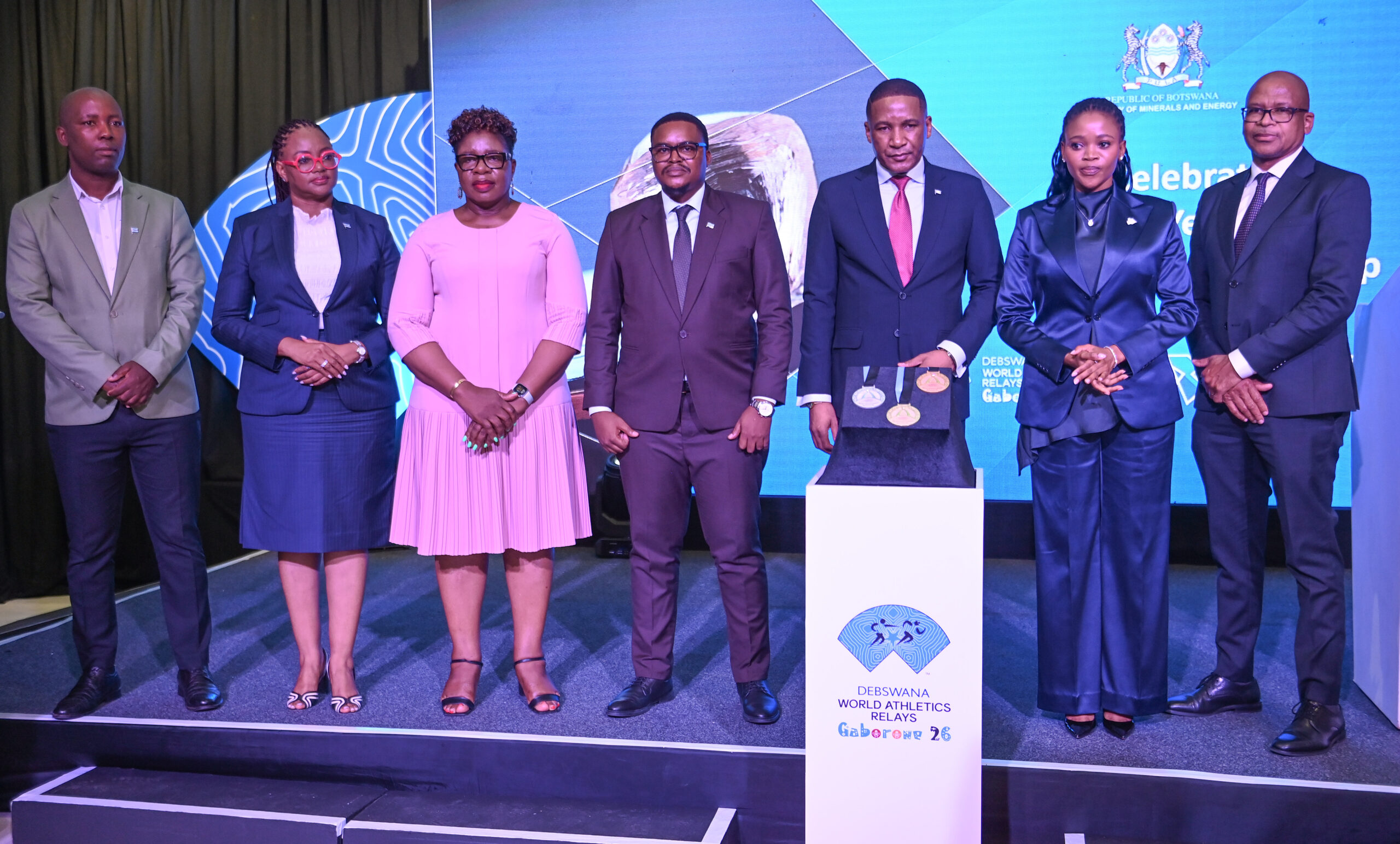
On 22 April 2026, at the Botswana National Museum in Gaborone, the Government of Botswana and the country’s diamond sector came together for an announcement that carries significance well beyond ceremonial occasion. The launch of the 60 Years of Diamond Leadership Initiative — and the simultaneous unveiling of natural diamond-embedded medals for the Debswana World Athletics Relays Gaborone 26 — marked a deliberate and coordinated statement of intent: that Botswana’s diamonds must now work harder, travel further and mean more than the revenue they generate at the mine gate.
For the global gems and jewellery trade, the initiative carries a message worth heeding. Botswana — the world’s leading producer of gem-quality diamonds by value — is no longer content to define its role solely by what it extracts from the earth. It is actively constructing a national diamond brand, anchored in provenance, ethical sourcing, downstream beneficiation and cultural identity. In doing so, it is also raising the bar for what origin-story marketing can achieve in an era when consumers and industry alike are demanding greater transparency and traceability from the natural diamond pipeline.

A value chain united around a single platform
What makes the initiative structurally notable is the breadth of industry participation it has assembled under a single national framework. The House of Botswana — the coordination body for the initiative — has brought together Okavango Diamond Company (ODC), De Beers Group, Debswana Diamond Company, Diamond Trading Company Botswana, Lucara Botswana and KGK Diamonds. The presence of both state-linked entities and private sector majors within the same initiative reflects a level of value-chain alignment that is rarely achieved in the diamond trade.
Within this broader coalition, the partnership between ODC, Ankit Gems and SRK on the polishing of Botswana natural diamonds for the athletic medals — alongside Nungu Diamonds in the jewellery-making component — demonstrates a deliberate effort to activate the downstream segments of the value chain on home soil. The medals themselves are not merely symbolic. They are a proof-of-concept: that Botswana-origin diamonds can be cut, polished, set and presented as finished luxury goods, rather than exported as rough for value addition elsewhere.
Ministerial Statement
“Today, Botswana stands as a benchmark for ethical luxury, where diamonds are valued for their integrity, their traceability, and their contribution to national development.”
— Hon. Bogolo Kenewendo, Minister of Minerals and Energy, Botswana
Provenance as a trade asset
Minister of Minerals and Energy Hon. Bogolo Kenewendo used the platform to set out Botswana’s strategic priorities for its next chapter of diamond development: advancing provenance documentation, deepening socio-economic impact, expanding citizen participation across the value chain and accelerating downstream beneficiation. These are not new aspirations for Botswana, but the framing — and the global platform on which they are being articulated — signals a more assertive approach to positioning the country’s diamonds in an increasingly competitive natural diamond market.
For manufacturers, retailers and brands that source or market natural diamonds, Botswana’s emphasis on traceability and ethical provenance is a commercial signal as much as a policy one. As the natural diamond industry navigates the sustained challenge from the lab-grown segment, the ability to attach a credible, verifiable origin story to a stone has become one of the most compelling differentiators available to the trade. Botswana is investing — institutionally and publicly — in making that story as powerful as possible.
Sport diplomacy and the global visibility play
The choice of the Debswana World Athletics Relays Gaborone 26 as the centrepiece of this diamond initiative is strategically astute. Athletics is a global spectator sport with a genuinely international broadcast and media footprint. By embedding Botswana natural diamonds into the medals awarded to athletes from across the world, the initiative ensures that images of those medals — and, by association, Botswana’s diamonds — travel to audiences that traditional trade marketing rarely reaches.
President Duma Gideon Boko, who addressed the launch event, framed the World Athletics Relays as a platform of national resilience and international confidence — a moment through which Botswana can host the world on its own terms. The convergence of diamonds, sport and national pride on a single public platform is a form of soft-power branding that the global luxury and jewellery industry would recognise immediately. Botswana is, in effect, building aspirational equity around its diamonds in the same way that heritage jewellery houses build equity around their provenance narratives.
Enterprise development and the Tokafala dimension
Beyond the headline optics, the initiative includes an enterprise development strand that deserves particular attention. The Tokafala-supported Leteise Tote Bag project, curated by AfroFusion and facilitated through Debswana, has supported the training of 34 textile operators across Botswana — the majority of them women, including participants from mining communities such as Boteti. The tote bags produced through the programme will represent Botswana at international trade fairs and global engagement platforms.
This dimension of the initiative reflects a broader principle that the Botswana government and industry are seeking to embed across the diamond value chain: that the benefits of diamond wealth must cascade meaningfully into communities, and that the creative economy — design, craft, textile, cultural production — must be activated alongside the extractive and manufacturing sectors. For trade stakeholders evaluating Botswana as a sourcing or partnership destination, this signals an operating environment that is increasingly attentive to ESG outcomes at the community level.
What this means for the trade
The 60 Years of Diamond Leadership Initiative is, at its core, a nation-building exercise. But it is also a sophisticated piece of trade positioning. Botswana is signalling to the global diamond industry — to manufacturers in Surat, to retailers in New York and Hong Kong, to brands in Antwerp and Geneva — that its diamonds carry a story, a standard and a set of values that can be leveraged as a commercial asset at every point in the supply chain.
As the natural diamond industry continues to navigate structural challenges — from lab-grown competition to shifting consumer expectations around sustainability and origin — initiatives of this kind represent one of the most credible responses the trade has at its disposal. Botswana, at 60, is not merely celebrating what its diamonds have built. It is actively shaping what they will mean for the next six decades.
Related Coverage

IIGJ Mumbai Celebrates 79 Graduates, Showcasing Innovation and the Future of Jewellery Design

UNNATI: Building the Women Who Will Shape India’s Jewellery Future
GJS 2026 Diwali Edition to Bring 400+ Exhibitors to Mumbai from October 2–4
GJEPC Holds 60th AGM, Reviews FY2025-26 Performance and Industry Priorities

De Beers’ 2025 Sustainability Report Signals Where the Natural Diamond Industry Is Heading