


In a significant policy implementation move, the All India Gem and Jewellery Domestic Council has translated a Maharashtra government directive into a practical, ground-level framework — one that for the first time gives jewellery traders across the state structured protection against undue law enforcement interference during theft investigations.
Key Highlights
- The GJC Maharashtra SOP initiative is a structured framework of guidelines and Standard Operating Procedures issued by the All India Gem and Jewellery Domestic Council to regulate police conduct during theft investigations at jewellers’ premises across Maharashtra, issued in Marathi, English and Hindi.
- Under the GJC guidelines, police officers visiting jewellers’ premises must record the purpose of their visit in the merchant’s register and sign it, share relevant case details or FIR copies with the trader, record statements at the trader’s premises wherever feasible and base any arrests strictly on credible evidence.
- GJC’s framework establishes three tiers of vigilance committees: a State-Level Committee under the Director General of Police meeting annually, and District and Commissionerate Committees meeting quarterly to review implementation and address trader grievances.
- GJC issued the guidelines in Marathi, English and Hindi to ensure that jewellers across Maharashtra — including those in smaller towns and district-level markets — could clearly understand their legal rights and procedural protections during police investigations.
- The All India Gem and Jewellery Domestic Council (GJC) is India’s national trade body representing the domestic gems and jewellery sector. It has over two decades of experience in policy advocacy and serves as the primary interface between government regulatory directives and the jewellery trade.
The All India Gem and Jewellery Domestic Council (GJC) has launched a comprehensive industry-wide initiative designed to safeguard jewellery traders across Maharashtra by formalising the procedures that govern police conduct during theft-related investigations at jewellers’ premises. The rollout — comprising structured guidelines, multilingual Standard Operating Procedures and a new tiered vigilance committee framework — marks one of the most substantive exercises in trade-law enforcement interface management that the domestic jewellery sector has seen in recent years.
The initiative is anchored in the Maharashtra Government’s circular dated 14 March 2024, which set out directives for fair and accountable policing in commercial theft investigations. GJC’s contribution has been to interpret, structure and operationalise those directives into implementable frameworks accessible to traders at every level of the ecosystem — from large retail establishments in Mumbai to smaller family businesses in district towns.
Critically, GJC has issued the guidelines and SOPs in three languages — Marathi, English and Hindi — a step that significantly extends the practical reach of the framework beyond metropolitan trade centres and into the wider Maharashtra jewellery community.
Procedural Safeguards: What the Framework Establishes
At the operational level, the guidelines introduce a set of enforceable procedural requirements that directly address the most common points of friction between law enforcement and jewellery traders during investigations.
Police officers visiting traders’ premises are now required to record the purpose of their visit in the merchant’s register and provide their signature — creating an auditable trail of every official interaction. Investigations that extend beyond jurisdictional limits must be routed through appropriate vigilance mechanisms before any approach is made to traders. Relevant case details or copies of First Information Reports must be shared with the trader under investigation, ensuring transparency at the evidentiary stage.
The framework also addresses the question of business disruption — a concern of particular practical significance for jewellers whose retail operations cannot easily absorb the disruption caused by off-premises police proceedings. Wherever feasible, statements are now to be recorded at the trader’s own premises. Traders are not to be compelled to accompany police officers unless the circumstances make it absolutely necessary, and arrests are to be strictly grounded in credible evidence, ensuring that genuine traders are not exposed to unwarranted harassment.
A Three-Tier Vigilance Architecture
Beyond the procedural guidelines, the initiative establishes a structured vigilance and monitoring mechanism operating at three levels — State, Commissionerate and District — to ensure consistent implementation and provide a formal channel for grievance redressal.
The State-Level Vigilance Committee will function under the supervision of the Director General of Police and convene annually to review implementation at the macro level. District and Commissionerate Committees will meet quarterly, providing more regular oversight and a closer interface with ground-level concerns. Together, these committees create an institutional accountability structure — one that is notably more formalised than the informal representations that have historically characterised the industry’s engagement with law enforcement.
Leadership Statements
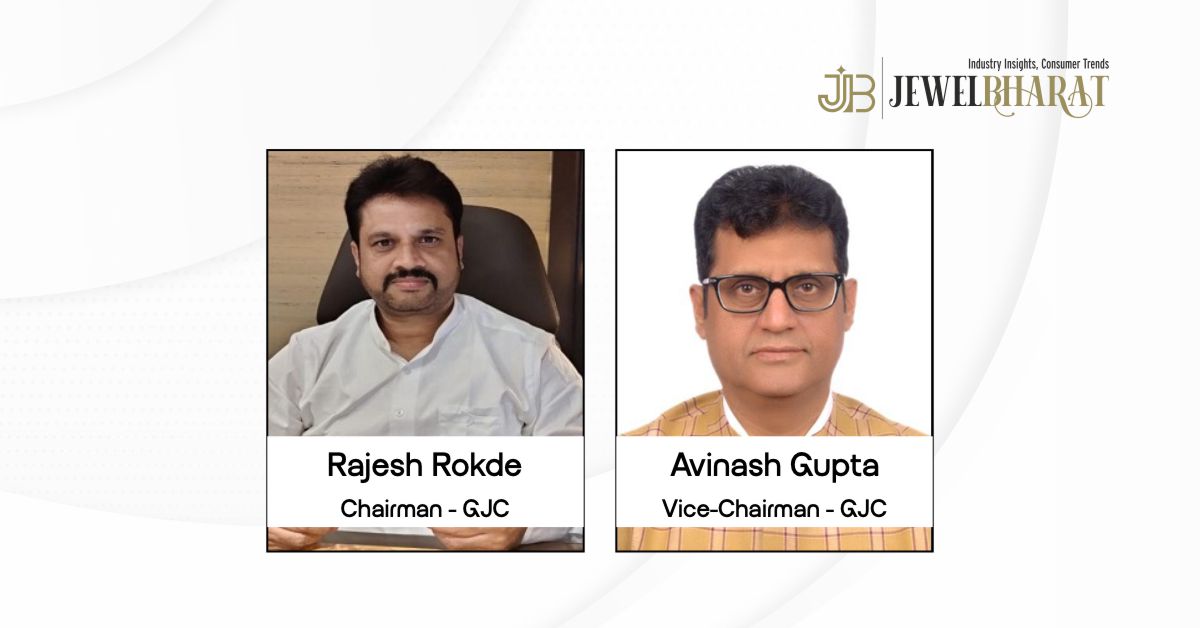
Rajesh Rokde, Chairman of GJC, described the initiative as a defining step in the protection of genuine traders. “By ensuring structured procedures, documentation and oversight mechanisms, the framework promotes transparency and accountability while protecting traders from unnecessary harassment,” he said. “GJC’s role has been to ensure that these guidelines are effectively understood and implemented across the industry.”
Avinash Gupta, Vice Chairman of GJC, highlighted the significance of the multilingual dimension. “The introduction of multilingual SOPs and practical guidelines reflects a progressive and inclusive approach,” he said. “It empowers jewellers with clarity and confidence while enabling constructive cooperation with law enforcement agencies.”
Trade Significance and Broader Outlook
For India’s domestic jewellery trade — a sector that operates across a vast and diverse retail landscape, often with limited institutional support at the local level — the GJC initiative addresses a long-standing and widely felt vulnerability. Jewellers, particularly smaller independent traders, have historically had limited recourse when faced with procedurally irregular police visits or investigation-related business disruptions. The formalisation of these guidelines, backed by a monitoring mechanism with defined meeting schedules and oversight hierarchies, marks a meaningful advance in the trade’s institutional self-protection capacity.
GJC’s role in this exercise — as translator, disseminator and implementation partner for a government policy directive — also reinforces its positioning as an effective bridge between the regulatory environment and the trade. The success of the rollout across Maharashtra will likely determine whether similar frameworks are considered for other states where the domestic jewellery trade has raised comparable concerns.
Related Coverage

GJS 2026 Diwali Edition to Bring 400+ Exhibitors to Mumbai from October 2–4

GJC Calls 67% Hike in Gold Hallmarking Charges Unwarranted, Seeks Immediate Government Review

IIM Ahmedabad, GJC Launch GEMLEAD Focus 2026 to Prepare Next-Generation Jewellery Leaders

GJC Opens Entries for 15th National Jewellery Awards 2026

GJC Chairman Rajesh Rokde Reacts to 10% U.S. Tariff on Indian Imports, Calls for Immediate Government Intervention