


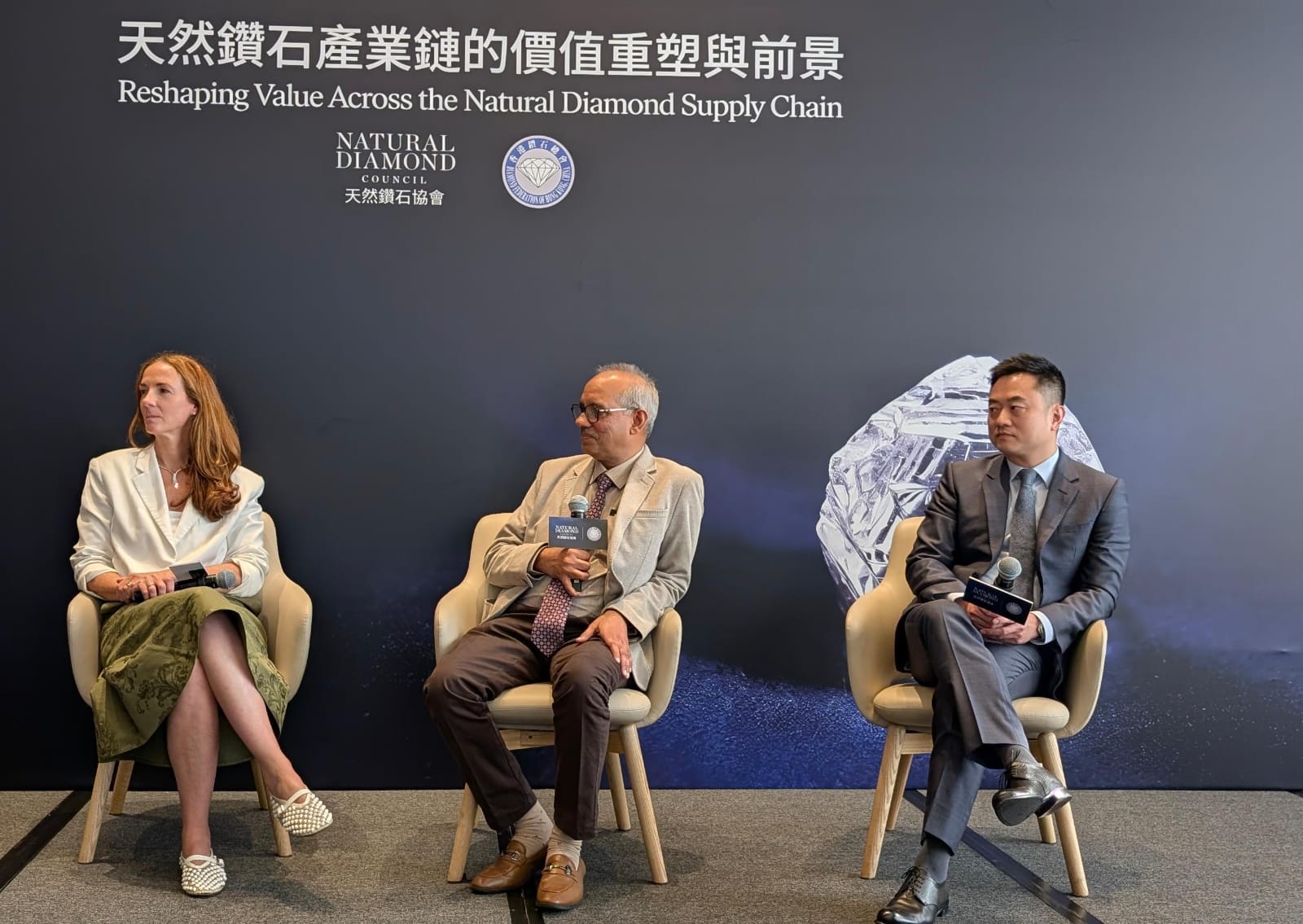
WFDB President calls for unified grading standards, stronger consumer protection, Mine-to-Market transparency, and a global identity for natural diamonds.
Key Highlights
- WFDB President Mehul Shah unveiled an eight-point roadmap for the natural diamond industry at JGW Hong Kong 2026.
- Called for stronger branding, storytelling and value addition for natural diamonds.
- Proposed seamless Mine-to-Market transparency through blockchain and traceability.
- Urged the industry to invest more in consumer-focused marketing.
- Said natural and laboratory-grown diamonds should remain distinct categories.
- Advocated clear consumer declarations across invoices, certificates and branding.
- Called for global standardisation of diamond grading.
- Proposed a worldwide authenticity mark for natural diamonds.
- Invited Hong Kong trade members to attend IIJS Mumbai.
The natural diamond industry must strengthen consumer trust, create greater value beyond the product itself and work collectively across the global supply chain if it is to secure long-term growth, according to Mehul Shah, President of the World Federation of Diamond Bourses (WFDB).
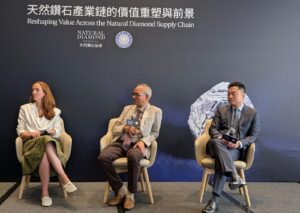
Addressing industry leaders during the Natural Diamond Council (NDC) panel discussion titled “Reshaping Value Across the Natural Diamond Supply Chain” at Jewellery & Gem WORLD (JGW) Hong Kong 2026, organised in collaboration with the Diamond Federation of Hong Kong (DFHK), Shah presented an eight-point strategic framework aimed at reinforcing the future of natural diamonds.
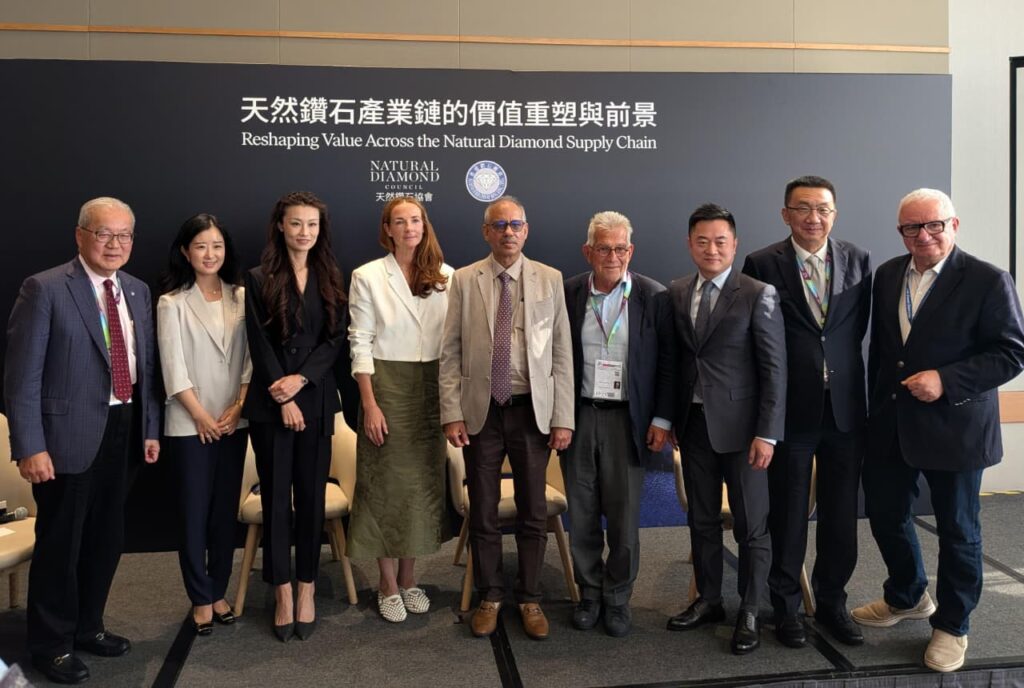
His roadmap focused on strengthening cooperation between mining countries, manufacturers, traders, retailers and industry organisations, while placing greater emphasis on transparency, consumer education and globally recognised standards.
For India—the world’s largest diamond manufacturing hub—many of the proposals align closely with the priorities of exporters, manufacturers and the Bharat Diamond Bourse ecosystem.
From Selling Diamonds to Creating Value
One of Shah’s strongest messages was that the industry must move beyond treating natural diamonds as commodities and instead build stronger emotional and commercial value around them.
He emphasised that branding, jewellery design, craftsmanship, storytelling and innovation should become central pillars of the industry’s future, helping consumers appreciate the uniqueness of natural diamonds rather than viewing them solely through price comparisons.
According to Shah, creating value beyond the stone itself is essential for strengthening long-term consumer demand.
Strengthening the Three M’s: Mines, Manufacturers and Markets
Another key pillar of Shah’s roadmap focused on deeper collaboration between what he described as the three M’s—Mines, Manufacturers and Markets.
He stressed that every stage of the journey—from mining and manufacturing to trading and retail—should become more transparent and interconnected.
Technologies such as blockchain, traceability systems and digital tracking can help create greater confidence throughout the supply chain while ensuring accountability from mine to market.
For India’s manufacturers and exporters, the proposal reflects the growing global importance of provenance and responsible sourcing.
Consumer Marketing Must Become a Priority
Shah also called for stronger investment in consumer-facing marketing for natural diamonds.
He urged closer cooperation between the Natural Diamond Council, trade organisations and jewellers worldwide to communicate the emotional, ethical and aspirational story behind natural diamonds.
He noted that films, media and storytelling continue to influence consumer behaviour, making coordinated marketing an important priority for the industry.
Natural Diamonds and Laboratory-Grown Diamonds Should Remain Distinct
Addressing one of the industry’s most closely watched discussions, Shah maintained that natural diamonds and laboratory-grown diamonds should be recognised as distinct categories, each serving different consumer segments.
He suggested that laboratory-grown diamonds may introduce some consumers to the broader diamond category before they eventually purchase natural diamonds as their purchasing power grows.
The distinction, he argued, should remain clear in the marketplace.
Clear Consumer Declarations Build Trust
Shah reiterated that consumer confidence depends on transparent communication.
He called for clear declarations identifying diamond categories across invoices, grading certificates, branding and marketing materials, while encouraging the use of local languages alongside English so that consumers in different countries can better understand what they are purchasing.
According to him, transparency becomes meaningful only when consumers clearly understand the information presented to them.
A Unified Global Diamond Grading Standard
Another major recommendation centred on creating greater consistency in diamond grading.
Shah advocated for a globally standardised grading framework involving industry organisations, gemological laboratories and governments.
He argued that greater uniformity would reduce consumer confusion while strengthening confidence in diamond purchases across international markets.
A Universal Identity for Natural Diamonds
Among the most ambitious proposals was the creation of a globally recognised identity for natural diamonds.
Drawing comparisons with internationally recognised certification systems used in other industries, Shah suggested that a universal authenticity mark could provide consumers with immediate confidence while reinforcing the distinct identity of natural diamonds worldwide.
Such an initiative, he indicated, could become an important long-term differentiator for the industry.
Building a Stronger Diamond Pipeline Together
Concluding his address, Shah described the diamond industry as one interconnected ecosystem where miners, artisans, manufacturers, graders, traders and retailers all depend on one another for sustainable growth.
Mehul Shah’s Closing Address
“The future lies in collaboration. It lies in authentic storytelling. It lies in technological innovation. It lies in consumer confidence. And above all, it lies in unified industry working together. Let us therefore work together to build a natural diamond industry that is trusted by consumer, empowered by technology, united in purposes and prepared for the generation to come. Thank you, and I wish DFHK and NDC every success in their continued efforts to strengthen the natural diamond industry globally.”
Before concluding his participation at JGW Hong Kong 2026, Shah also invited members of the Hong Kong trade to attend the upcoming India International Jewellery Show (IIJS) in Mumbai, reinforcing India’s continued importance in the global natural diamond ecosystem.
Related Coverage
IIGJ Mumbai Celebrates 79 Graduates, Showcasing Innovation and the Future of Jewellery Design

UNNATI: Building the Women Who Will Shape India’s Jewellery Future

GJS 2026 Diwali Edition to Bring 400+ Exhibitors to Mumbai from October 2–4
GJEPC Holds 60th AGM, Reviews FY2025-26 Performance and Industry Priorities

De Beers’ 2025 Sustainability Report Signals Where the Natural Diamond Industry Is Heading